

 By
By What happens in the days following the Queen’s death?
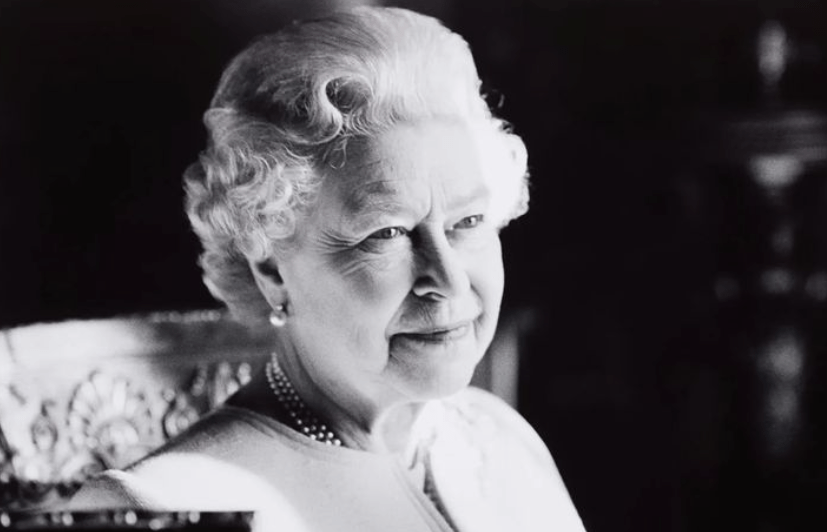
Yesterday evening the tragic news broke that her majesty Queen Elizabeth the II passed away aged 96 at Balmoral Castle in Scotland surrounded by her family.
The news has shocked the entire world, as the nation goes into a time of mourning and reflection to remember how the Queen served the UK with grace, dignity and love for 70 years.
However, minds will start to wonder what happens now?
As of Friday morning the official morning period has begun which will last around 12 days.
Thursday would traditionally have been D-Day or D+0 in the plans for the aftermath of the Queen’s death, codenamed London Bridge.
But as the announcement came late in the day plans have been shifted a day to allow the complex arrangements to be put in place.
The King and Camilla – now Queen Consort – remained at Balmoral overnight before returning to London today.
A period of mourning for the Royal Family will be observed from now until seven days after the Queen’s funeral, Buckingham Palace says.
In a statement, Buckingham Palace says: “Following the death of Her Majesty The Queen, it is His Majesty The King’s wish that a period of Royal Mourning be observed from now until seven days after The Queen’s Funeral.”
Separate to national mourning, which the government is expected to outline today, Royal mourning is to be observed by “members of the Royal Family, Royal Household staff and Representatives of the Royal Household on official duties, together with troops committed to Ceremonial Duties”.
The Queen will be commemorated by pomp and ceremony as the nation begins a period of mourning to mark the death of its former monarch.
Gun salutes will ring out in the capital and bells will toll across the country, with churches, chapels and cathedrals encouraged by the Church of England to open for prayers or a special service for mourners.
The following is expected to take place on Friday:
- The King and Queen Consort return to London
- Audience with the PM – As the new sovereign, King Charles will have his first audience as monarch with Prime Minister Liz Truss.
- Confirming funeral plans – The King is likely to meet the Earl Marshal – the Duke of Norfolk – who is in charge of the accession and the Queen’s funeral, to approve the schedule for the coming days.
- The London Bridge arrangements have long been planned in consultation with the Government. They will incorporate Operation Unicorn, the contingency plans for the death of the Queen in Scotland.
- National mourning – The Government will confirm the length of national mourning, which is likely to be around 12 days, from now up to the day after the Queen’s funeral. They will also announce that the funeral day will be a public holiday in the form of a Day of National Mourning.
- Flags – Union flags on royal buildings are flying at half-mast. The Royal Standard never flies half-mast. It represents the Sovereign and the United Kingdom, and is a symbol of the continuation of the monarchy. If the new King is in residence at a royal palace or castle, the Royal Standard will fly there full-mast as is the tradition.
- Bells and gun salutes – Bells will toll at Westminster Abbey, St Paul’s Cathedral and Windsor Castle as well as churches across the nation at noon.
- Gun salutes – One round for every year of the Queen’s life will be fired in Hyde Park and at other stations.
- Charles’s televised address – The King will make a televised address to the nation, which he is due to pre-record, in the early evening. He will pay tribute to the Queen and pledge his duty to his service as the new sovereign.
- Service at St Paul’s Cathedral – The Prime Minister and senior ministers will attend a public service of remembrance at St Paul’s in central London.
On Saturday it is expected that Charles will be formally proclaimed King in a ceremony at St James’s Palace in London in front of a ceremonial body known as the Accession Council.
At the meeting, the death of Queen Elizabeth will be announced and a traditional proclamation will be read aloud.
King Charles will then attend a second meeting with the group where he will make his first declaration and swear an oath to preserve the Church of Scotland. After trumpeting and fanfare, he will be formally declared the new King as gun salutes are fired from sites around the city.
Flags will return to full mast for a 24-hour period beginning at 13:00 BST on Saturday to mark the proclamation of King Charles as King, before returning to half-mast.
Meanwhile, Queen Elizabeth will lie in rest at St Giles Cathedral in Edinburgh as preparations are made for her funeral, which is expected in around 10 days. The coffin will then be flown to London, where hundreds of thousands of people will be allowed to file past over a period of four days’ lying in state at Westminster Hall.


