

 By
By New haven for wildlife an ‘innovative approach’ for Humber Estuary
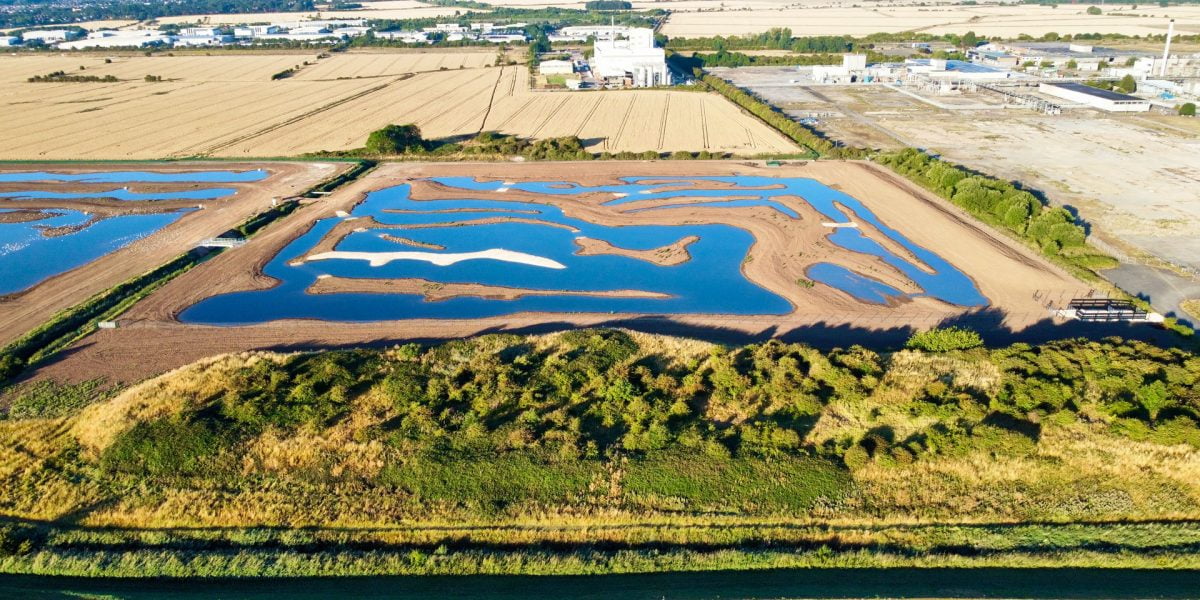
A new haven for wildlife on the Humber Estuary in North East Lincolnshire is starting to appear and show signs of diverse wildlife activity.
NELC has showcased a report from Roger Wardle, who heads up a specialist consultancy that creates these sites, he explains the aims behind the site and how these are built.
The area is designated as a Ramsar site, a Wetland of International Importance. It is also a Special Protect Area (SPA) for its birds, as well being a Special Area for Conservation (SAC) and European Marine Site. Since 1988 UK legislation has protected the area as a Site of Special Scientific Interest (SSSI).
Many wading birds use the Humber estuary as a “stopping off” point on their migration journeys, and eventually, most migrate back to their Northern breeding grounds in the spring.
Novartis Ings had been created following the transfer of 35 acres of land, free of charge, from Novartis Grimsby, adjacent to the Estuary to provide a haven, after manufacturing at the site next door for over 70 years. Another section of land was also gifted by Solenis.
Roger Wardle said:
“Both Novartis Ings and the Cress Marsh have been created as part of the £42m South Humber Industrial Investment Programme that has already seen the creation of the new link road between Grimsby and Immingham, and a purpose-built business park on the A1173 near Immingham with MyEnergi as the anchor tenants.
“As a condition of developments, mitigation land must be set aside, especially for roosting waders. These birds require wide open undisturbed sites ideally with a mosaic of shallow water with spits an island where they can roost safely at high tide. The Council has taken this innovative approach of building the “mitigation” sites before they are actually needed in terms of the development process.
“The site will be providing wet grassland that is in mosaic with a storage lagoon, scrapes, islands, and spits with slightly higher points to help the birds spot potential predators. Appearance to some will be a rather open and bare habitat but that is just what the waders need and are adapted to as a means of reducing predation.
“The primary design of the site aims to provide a reliable wader roosting area free of disturbance with essential short vegetation within a wide-open habitat to which they are adapted.
“Oystercatcher, lapwing, redshank, and other waders used to breed in the area but are now very scarce or don’t breed at all locally due to a lack of suitable breeding habitat. This new site although primarily designed for roosting is likely to provide renewed opportunities for lost breeding waders to return.
“We’ll also be introducing cattle to the site from spring to autumn to help control the vegetation – the target species for this site much preferring short grass or bare ground. The cattle also make large footprints at the water’s edge creating micro-habitats for lots of insects that the birds subsequently feed on, not to mention the large biomass of invertebrates that live on dung pats.
“When the site is complete soon, it will add to the locations interest for people to come and watch a range of birds, not just waders.
“Autumn, winter, and early spring, especially when the tide is in should see significant flocks flying in and out of the site, but easily overlooked once landed. They will be easily visible from the edges and the sea wall, better still with binoculars. As with all sites like this, we would ask that people respect the site, keep quiet, and generally try to reduce bird disturbance.
“Even before it is finished a flock of a 100 or so curlews are already using the site.
“Only time will tell – it might not be an overnight success, but we are very optimistic that the site will be a significant environmental contribution in conserving the waders of the Humber.”
(Image: NELC)


