

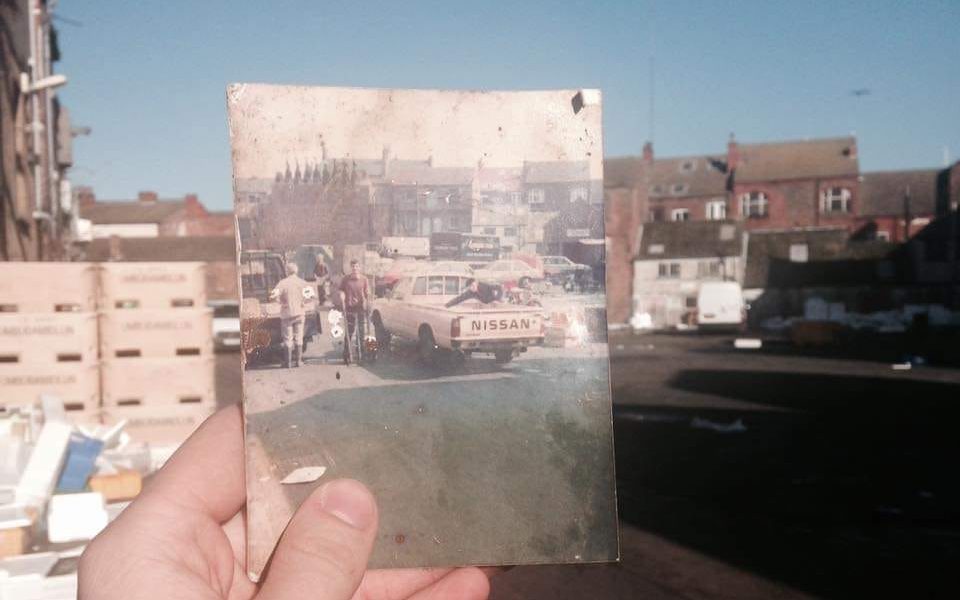
 By
By Confusion over Grimsby Docks area dubbed ‘Kasbah’ where is it?
‘Kasbah’ is an Arabic word that translates as “a central part of a town or citadel” as well as a keep, old city, watch tower, or blockhouse.
It is used to describe an area, which could typically be a marketplace, with narrow darkened streets. The character and appearance of this area of The Port of Grimsby, made it known locally as the Kasbah.
The Kasbah sits on an area of ‘made ground’, which was reclaimed and raised from the foreshore in the mid-19th century. Its ‘network of buildings’ was formed with vacant space between the docks and its selection of rail connections.
Construction in the area now known as The Kasbah started in the 1870s. The pattern of streets represents a dense network consisting of smokehouses, warehouses, and shops with an almost ‘town-like’ character.”
The central area of this is made up of three parallel streets – Fish Dock Road, Maclure Street, and Auckland Street. The buildings and landscape of the Kasbah were prime central to Grimsby’s port as it was dubbed the world’s greatest fishing port.
The area includes factories, shops, and warehouses built to service the booming fishing industry. It also includes a deserted bank and cafe. There was also the Cosalt premises and the Hammond & Taylor site, on the adjacent Fish Dock Road, both of which were demolished.
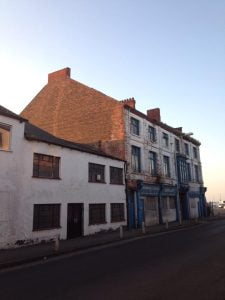
The Hammond & Taylor premises.
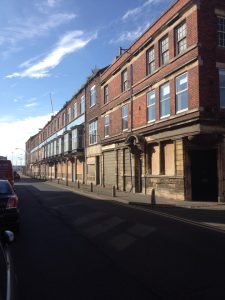
The Cosalt building originally was separated and featured the butchers and the bank building on the far right side.
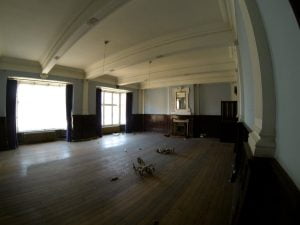
The boardroom of the Cosalt premises was said to have a large oak table used for conferences.
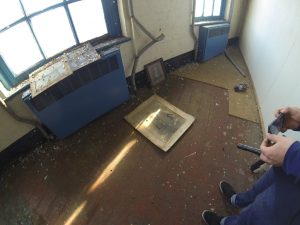
A framed picture of founder David Ross was also featured in the building.
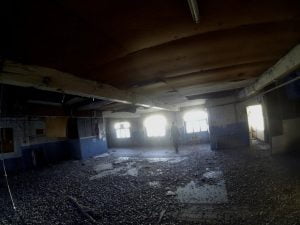
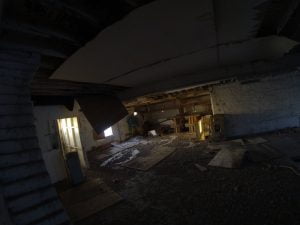
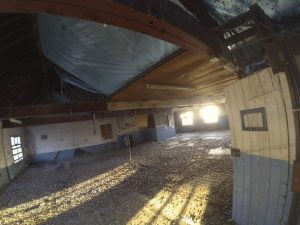
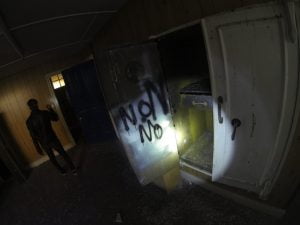
Inside the Hammond & Taylor premises, now demolished.
The Kasbah features eight grade-II listed buildings, which are protected by law. There are also traditional smokehouses, with a total of six listed examples found within the Kasbah, including Alfred Enderby’s, which received a grant through the heritage fund to regenerate some of its facades.
Also on Fish Dock Road, Tom Taylor and Son sits in front of the area, the shop was referenced as “the most impressive and well preserved” example of its type. The business survives carried on by Fraser Taylor, and his son Cameron, who continue to provide services.
The area was developed in the 1870s, grew to serve the booming fishing port, and is described by Historic England as the ‘most important representation of industrial-scale fishing in the UK’. At the time banks, a post office, and even a butcher’s shop were a part of the streetscape.
There were individual plots in between the railway lines, resulting in often odd-shaped buildings in a variety of architectural styles, with narrow alleyways between them, which were recently used in an unknown Netflix production. Because of this, the specific part of the historic dock was dubbed ‘The Kasbah’ and the name stuck.
Also, it is said to have featured large canopies that covered some of the areas, contributing to the naming of the area.
In 2018, Great Grimsby Ice Factory Trust secretary Graeme Bassett said: “The Kasbah represents a nationally significant example of an area dominated by the fishing industry for more than 150 years.
“The wide variety and collection of buildings – some of which are unique to this location – have huge value, and reflect the wide range of services and activities essential to its success.
“The existing buildings show a remarkable capacity for survival, evolving gradually over time to meet new commercial needs whilst continuing its core use and maintaining their general historic fabric.”
He added: “The area is remarkable for both its success and rapid growth as well as for its innovation and influence.
“The Kasbah’s buildings are an irreplaceable resource for understanding the development of the fishing industry in Britain.”
In October 2017, the Kasbah was designated a conservation area and included in the 2018-2023 Greater Grimsby Heritage Action Zone bringing hope, protection, and funding opportunities to this historic site.
The Kasbah Steering Group, features Associated British Ports, North East Lincolnshire Council, and Historic England with the Great Grimsby Ice Factory Trust. They are working as a partnership to support the regeneration of this historic part of Grimsby.


