

 By
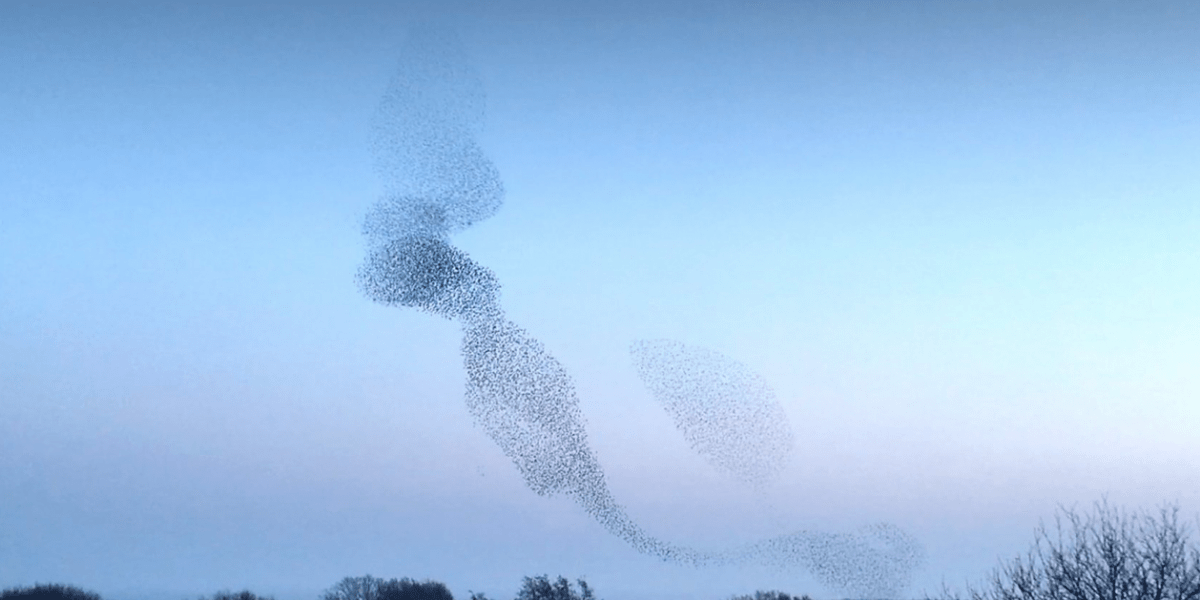
By Seeing hundreds, even thousands of starlings flying together in an ever-changing pattern is a phenomenon of nature that amazes and delights those lucky enough to witness it.
During the winter months, large numbers of starlings visit Britain from the continent, seeking out the relative warmth of our island climate.
As dusk arrives, the starlings set off for their communal roost in one of the most staggering natural spectacles of all. Flocks arrive from all directions, gathering in the skies above their roost sites.
As the numbers reach into the tens and hundreds of thousands take on incredible shapes in the sky, contracting and expanding as one flock merges into another, and taking on a life of their own; swirling back and forth in ever more complex and beautiful patterns.
The Wildlife Trust say ‘As the numbers reach their peak and the last of the light fades, the birds suddenly decide the time is right, as if by a secret signal. They funnel down into the reeds in one last whoosh of wings, and the show’s over. The birds settle down to sleep and it’s time for you to head home.’
Murmuration in Lincoln: Image Manoury Media
Bird watching is not ‘essential travel’, says RSPB.
THE Royal Society for the Protection of Birds (RSPB) has said travelling to ‘view starling murmuration’ is not ‘essential travel’.
The charity has placed a warning on its information page about the Otmoor nature reserve stating that travelling to view the birds is not in accordance with Government guidelines.
Coronavirus restrictions currently in place state that any travel away from the home must be ‘essential’, such as going to work or daily outdoor exercise.
Starling murmuration’s take place in the winter months between October and March.
The murmuration is a ‘mass aerial stunt’ where ‘thousands of birds all swooping and diving in unison’ say the RSBP.


